Motoring offences across England and Wales have reached a record high, with nearly 3 million cases recorded in 2024.
Speeding alone accounts for the vast majority of these, making up 86% of all offences, while separate data has indicated that the number of people killed or seriously injured on the strategic road network has edged up again.
So, what does this actually tell us about road safety and what does it mean for fleets?
Speeding Remains The Dominant Road Safety Issue
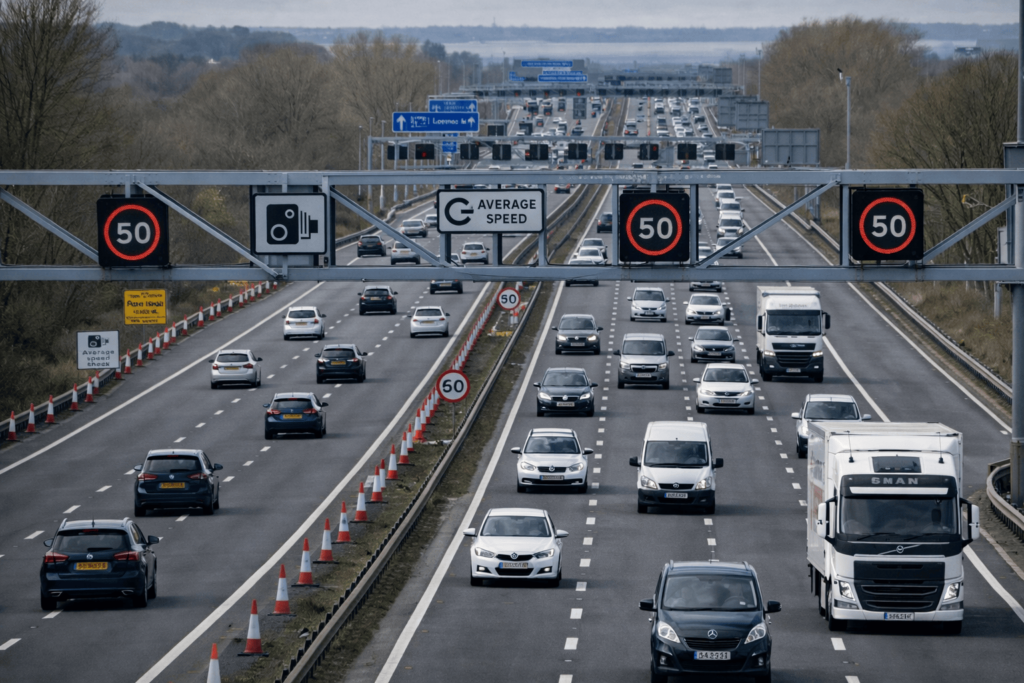
Speeding continues to be the most common offence by a significant margin, but as we’ve explored previously, it’s not always as simple as drivers choosing to ignore limits.
In many cases, speeding is the result of inattention or uncertainty, whether that’s misjudging changing limits, navigating variable speed zones, or switching between vehicle types with different restrictions.
That doesn’t make it any less of a risk, but it does shift the conversation slightly.
For fleets, it highlights that compliance isn’t just about enforcement, it’s about awareness and consistency behind the wheel.
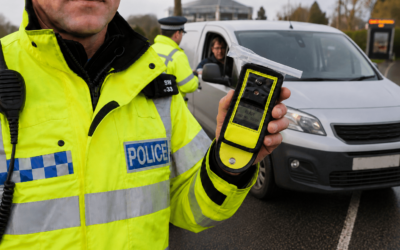
Careless driving offences have also risen sharply, alongside increases in mobile phone use and seatbelt violations. These are behaviours typically linked to distraction and lapses in concentration, two of the most common contributing factors in road incidents.
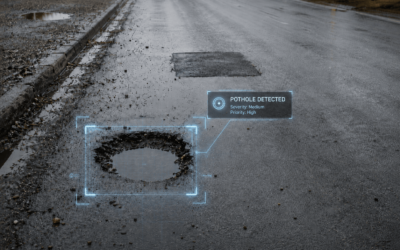
And with more advanced enforcement technology now able to detect multiple offences at once, many of these behaviours are becoming far more visible than they were even a few years ago.
More Offences, But Not Necessarily Safer Roads
One of the more interesting dynamics is that while offences are rising, improvements in road safety appear to have stalled.
Casualty numbers have increased slightly, even though the rate per mile travelled has remained broadly stable.
In simple terms, roads aren’t necessarily becoming more dangerous per journey. but the total level of harm is still increasing as traffic volumes grow.
So, are drivers behaving worse, or are we simply detecting more of what’s already happening?
As we’ve seen with rising fines in other areas, increased automation and enforcement play a significant role in the numbers we’re seeing.
There’s also a bigger-picture factor to consider… there are more vehicles on UK roads than ever before, and people are making more journeys. That naturally increases exposure to risk, not just for individual drivers, but for entire fleets operating day in, day out.
Even small lapses in concentration or awareness become more significant when multiplied across higher traffic volumes and tighter road conditions.
What Does It Mean For Fleets?
For fleet operators, rising offence numbers aren’t just a statistic, they’re a signal. The reality is that risk is becoming more visible, more measurable, and in some cases, more frequent.
While enforcement and technology are evolving rapidly, they don’t address the root causes of driver behaviour.
Improving awareness, reinforcing best practice, and maintaining visibility over driver performance are still the most effective ways to reduce both offences and incidents.
For fleets, the focus shouldn’t just be on reacting to incidents or penalties, but on understanding where risk is developing before it leads to bigger issues.
At Driving Monitor, tools such as Risk Monitor and Telematics Monitor give fleets that visibility, helping identify patterns, improve driver behaviour, and reduce risk across the board.