A new study has explored the impact that ‘overestimating’ braking and stopping distances could have, particularly when the two-second rule isn’t being followed.
The Highway Code states that the ‘thinking distance’ is six metres, with the braking distances being an additional six metres.
However, according to a recent survey, most drivers believe the thinking distance is 19 metres and the braking distance is 25 metres, which is significantly higher – not an issue, necessarily…
But the figures get interesting when you realise that the only speed at which drivers underestimate the total stopping distance is at 70mph, the national speed limit on motorways.
Stopping distance is the combination of thinking distance, distance travelled while the driver reacts (dependent on speed) and braking distance.
And drivers ignoring the two-second gap could be playing a bigger part than you think…
It isn’t just that drivers aren’t following the two-second gap rule (which is, as you might think, leaving a two-second gap to the vehicle in front, which means the faster you’re driving, the larger that gap is in metres), it’s that many are completely unaware of it.
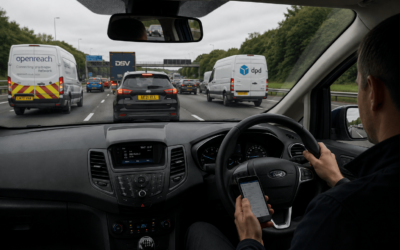
Some safety campaigners are blaming distractions in vehicles, including mobile phone and infotainment system use for navigation, music, podcasts, phone calls and more.
And some experts are even calling on an update to the Highway Code to reflect more modern driving situations.