Confidence is an often-overlooked part of road safety because drivers don’t just react to road layouts and signage, they react to how safe they feel using them.
When confidence drops, behaviour changes, hesitation increases and decision-making suffers.
That makes recent findings on driver attitudes towards smart motorways particularly important. New survey data shows that anxiety around smart motorways has risen sharply over the past year, especially on all-lane running routes where there is no permanent hard shoulder.
More than 12,700 drivers were surveyed, with the proportion reporting nervousness or anxiety on all-lane running smart motorways doubling in just twelve months, from 23 percent to 46 percent.
The Impact Of Smart Motorways On Driver Confidence
Roads where the hard shoulder is only opened during busy periods saw a similar increase, with anxiety rising from 30 percent to 47 percent.
By contrast, conventional motorways that retain a permanent hard shoulder continue to generate the highest levels of driver confidence, although even these roads have seen a small rise in concern.
All-lane running smart motorways have been contentious since their introduction.
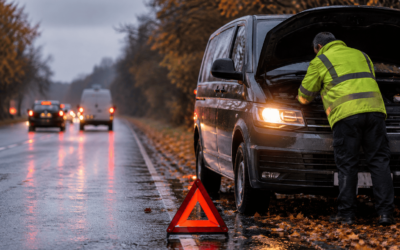
Removing the hard shoulder fundamentally changes how drivers perceive risk, particularly during breakdowns. Emergency refuge areas are typically spaced around three-quarters of a mile apart, which can feel a considerable distance when a vehicle loses power in live traffic.
Drivers responding to the survey described feeling exposed and unsafe when stationary in a running lane, especially in heavy or fast-moving traffic.
The safety debate surrounding smart motorways remains complex. Between 2010 and 2024, at least 79 people were killed on smart motorways, while analysis of incident data indicates that drivers who break down on motorways without a permanent hard shoulder are significantly more likely to be killed or seriously injured than those on roads where a hard shoulder is always available.
These risks help explain why confidence remains low, despite ongoing investment in safety measures.
The Future Of Smart Motorways
The government continues to defend the safety record of smart motorways.
The Department for Transport has stated that smart motorways remain among the safest roads in the country in terms of deaths and serious injuries, while emphasising continued monitoring and improvement. More than 150 additional emergency refuge areas have been installed in recent years in an effort to address driver concerns.
At the same time, National Highways has invested heavily in technology, including stopped-vehicle detection systems and upgraded signage designed to identify incidents more quickly and reduce response times.
Statistically, serious injury rates remain low relative to traffic volumes.
However, safety is not solely a matter of data. It is also about trust and transparency.
Delays in publishing safety reviews and uncertainty about how smart motorways are now being independently assessed following the cancellation of the programme have left many drivers unclear about how risks are being managed. When that clarity is missing, confidence suffers.
For fleets and professional drivers, this anxiety has real implications because increased stress can contribute to fatigue, slower reactions and inconsistent driving behaviour. A breakdown on an all-lane running motorway is not just inconvenient, it is a high-risk situation that requires calm, informed responses from drivers and operators alike.
At Driving Monitor, we understand those pressures and that’s why with Risk Monitor, you’re able to easily access all of the drivers posed by your drivers, giving you a clear view of where you stand.